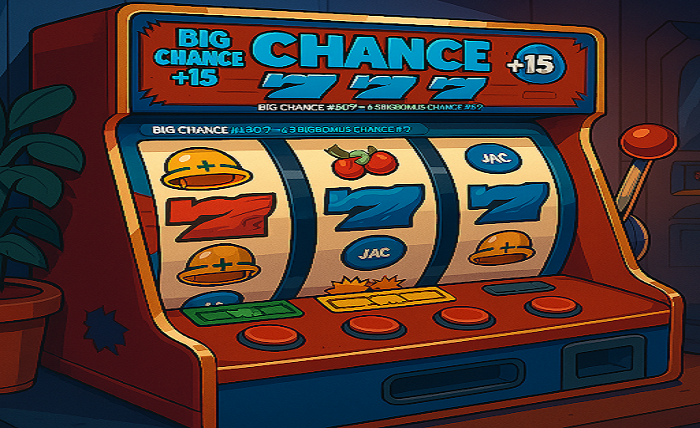
Walk into a casino, real or virtual, and one thing becomes clear fast: slot machines dominate. Flashing lights, sound effects, spinning reels are everywhere. Yet there’s a curious twist online: a massive portion of the time spent playing these games happens with no money at stake. Millions of people spend hours on free casino games that can’t pay out a single cent. There’s no jackpot or real-world prize. Still, the reels keep spinning.
So what keeps people coming back to these risk-free simulations of gambling? The answer doesn’t lie in entertainment alone. It lives in the way these games tap into our brains, biases, and emotional habits with precision.
Why near-misses feel like wins
Two matching symbols appear, the third one barely misses. In theory, a loss. In practice, a powerful motivator. Psychologists call this the “near-miss effect.” Our brains interpret it as progress. Even though each spin is random and independent, we feel like we’re getting closer to something.
Brain imaging studies show that near-misses activate the same reward regions as real wins. That’s why a loss can keep a player engaged just as much as a payout, especially in free play, where no real money is lost.
Control without control
Pressing a button, pulling a lever, choosing when to stop the reel — none of these actions affect the random number generator underneath. But the ability to interact creates a sense of agency.
Humans want to feel in charge of outcomes. Even when we aren’t, we behave as though timing or strategy matters. That false belief is difficult to shake and makes every spin feel like a decision rather than a coin flip.
Habits form fast
Every session follows a familiar loop. You choose to spin, receive feedback, and repeat. This is a compulsion loop. In games, it’s enhanced by variable rewards. Not every outcome is exciting, but some are. That uneven distribution keeps players engaged.
It’s the same mechanism used in social media feeds and mobile games. There’s always a small chance that the next action feels better than the last. The game only needs to offer intermittent satisfaction to keep someone returning.
Money isn’t the goal, time is the payment
These games are fast-paced and packed with sensory feedback, which makes them perfect environments for something called flow — a mental state where a person becomes completely absorbed in the task, loses track of time, and feels fully focused. In casino-style games, that flow state isn’t about skill—it’s driven by timing, repetition, and sound cues.
Even without money, the system earns value through ad impressions, data collection, or eventual conversion to paid play.
The full experience without the risk
A unique Free online Casino will use all these psychological ingredients (near-misses, flashy visuals, progression systems, and even themed environments) to deliver an experience that feels complete. The sounds and animations create a full-scale replica of the real thing, just without the wallet. For many, that’s the ideal scenario that offers excitement, control, and engagement without anxiety over money.
How free compares to real gambling
Here’s a breakdown of how free casino games differ from real-money gambling in structure and purpose:
| Category | Free Casino Games | Real-Money Gambling |
| Financial Risk | None | Player-funded losses and potential wins |
| Reward Type | Visual effects, achievements, virtual coins | Cash payouts |
| Psychological Hooks | Near-misses, control illusion, flow, habit | Same, but intensified by financial stakes |
| Duration of Play | Often longer sessions due to no consequences | Shorter due to financial risk |
| Transition Risk | May lead to real-money play over time | Already engaged in real-money behavior |
Social wins with no cash
Platforms increasingly include multiplayer features, chat, and leaderboards. It’s common to see players posting big wins (fake coins, of course, but real status within the platform). In those environments, winning becomes less about financial reward and more about recognition.
That kind of validation mimics what happens in real gambling environments. Being seen winning, even in free play, still feels good. And that’s enough to bring players back repeatedly.
The actual cost
Even if the game never asks for payment, there’s a cost, like time, focus, or even emotional energy. In other cases, it’s a gateway to future spending. Some players eventually move from free to real-money platforms often without planning to. On some level, it’s pretty similar to music streaming. You get access to all your favorite music for free. All you have to do is listen to some ads. Eventually, you can choose a paid subscription. It’s entirely up to you, but the free version is always lacking something.
What starts as entertainment becomes routine. Routine becomes preference. That preference, in some users, may lead to actual risk.